
04
Mar 2026
Fancy Horsies
I feel remiss for not having made any Chinese New Year-related post yet. I reread my old post from 2022 and realized that those are the same feelings I still harbor, so no need to write about that. (One of the benefits of keeping a blog, I guess?)
However, walking around Shanghai, I did notice this CNY decoration and felt it was worth sharing:

This statue has been there on 延安西路 (W Yan’an Rd.) for years and years, but I’m pretty sure that it only gets decorated this way in the year of the horse. (Sorry, I don’t know if they did this 12 years ago… I’m not paying that much attention!)
31
Dec 2025Reviewing 2025
This blog has been quiet in 2025. For one thing, blogs already seem to be a relic of the past (did you know that kids in the high school IB program learn “blog” as a text type, and they have no clue what it is at all until they learn about it in high school?). For another, there’s just a lot going on in my life. More to write about, perhaps, but less time to do it.
So today I thought I’d share a bit about what I’ve finished in 2025. I’ve done a lot of “quiet releases,” and in 2026 I’ll need to spend more efforts getting the word out.
2025 Releases
- Nex Kids Press book 3. I haven’t said much about the English kids’ books I’ve been working on with my friend Kuan since 2023. They don’t fit in with my “Chinese learning” theme because they’re entirely in English. They evolved out of my own needs, raising bilingual children in Shanghai with minimal English in the environment. Now Kuan (the illustrator of the books) is reading them with his own son. The concept is phonics-based beginner readers with a superhero theme. They’re really fun! Anyway, we had planned to release book 3 in 2025, but it looks like we didn’t quite make it. Early 2026 it is!

- ARC Plus subscription content. I’ve been doing Advanced Readings in Chinese (ARC) with my friend Pete for years already. It’s a free Substack newsletter. This past summer we released ARC plus, a paid subscriber add-on which includes audio to supplement the readings. It’s been a fun product to create, and we’ve been using AI as a big part of the process. (Free samples of ARC Plus were released in July and are still available online: #207, #208, #209.)

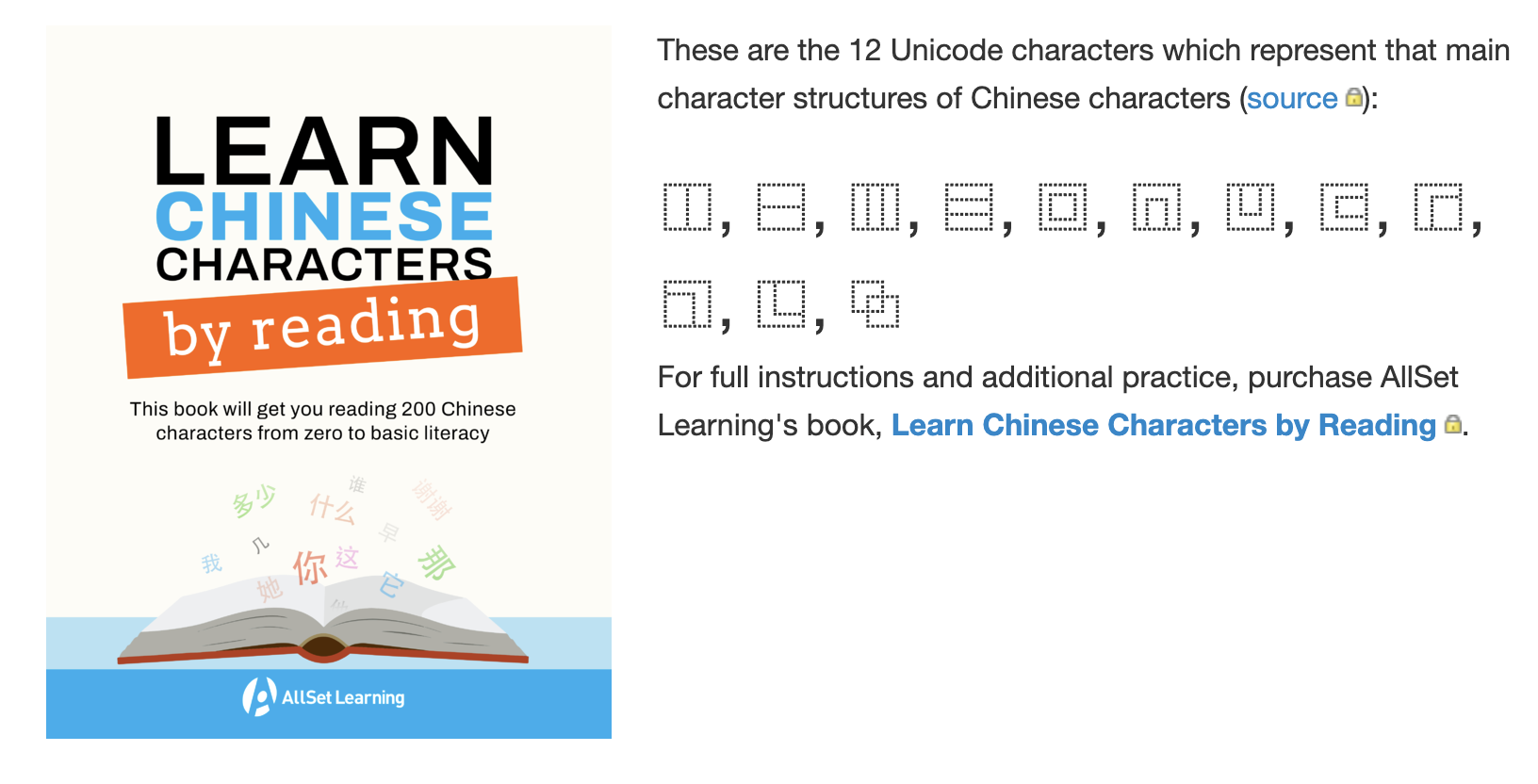
- Learn Chinese Characters by Reading (a book). This one evolved out of the idea of stripping down learning to read characters to the very basics: recognizing individual characters as part of simple sentences. It emerged organically out of my decade of work with AllSet Learning clients and also benefited from my work with graded readers at Mandarin Companion. What if you spent only the minimum amount of time learning about character etymologies, semantic components, etc. and focused more on just reading? Well, this book is the result! It can be done. And if you want to see the core 200 characters you learn in the book, you can do so online for free.
- AllSet GO: a beginner Chinese course in 10 video lessons. It’s a course designed to prepare beginners to do online lessons in Chinese. As such, the videos mimic video chats, and all of the vocabulary and interaction patterns you learn are focused on communication via online chat. It’s hard to believe that my friend Rob and I originally filmed this way back in 2020. We decided not to release it back then because of covid and a drop in interest in Chinese. Well, we’re done waiting! (Samples also available on Youtube.)

- But what about Mandarin Companion Chinese graded readers?? One thing I unfortunately can’t announce for 2025 is the release of our latest Mandarin Companion book, Robin Hood (Level 2). Yes, this one has been a long time in the making, and it’s very nearly done, but technical issues have resulted in more delays than I’d care to write about. However, Jared and I have continued to release You Can Learn Chinese podcasts all year.

Back in the Classroom
Why have I been so busy in 2025? Well, I haven’t talked about it on Sinosplice, but in recent years I’ve become an IBDP (International Baccalaureate Diploma Programme) teacher here in Shanghai. AllSet Learning and Mandarin Companion are still going but are not quite as busy as they once were, so I’m finding new ways to keep me exploring the modern education space, especially as AI hogs the EdTech spotlight in recent years.
I’m learning so much from high school kids! I’ve realized that it’s been kind of a blind spot for me, as I continue to learn about my adopted country every day. And now with cell phone culture and AI everywhere, there’s never been a better time to learn more about it. I’ve already got one teenager (she just turned 14 this year) and will have two pretty soon. So it’s good to be more familiar with what they’re facing. They’re also doing IB (the Middle Years Programme) here in Shanghai.
Reflecting on AI
There’s a lot to say about AI, but there’s also a lot of backlash out there. (I’m relatively sheltered from that backlash here in Shanghai, but I read a lot about it.) I’d love to hear what my readers think. (For my thoughts on language learning in the age of AI, see the podcast linked to above.)
Personally, I am interested in AI and invested in it (my current favorites are Google AI Studio and Google Notebook LM), but also sympathetic to the problems it may bring and that it’s already bringing. Yeah, AI slop kinda sucks (especially Sora 2 video slop), but I am quite optimistic that something really good for humanity will emerge from all the slop. Maybe not from OpenAI, but I do think we’ll see a lot more good come out of AI in 2026. I’ve got two new projects I’m working on in 2026, both related to AI and one to Chinese language learning, and I’m really optimistic about the future.
Here’s wishing everyone an excellent 2026!
24
Dec 2025Best Deal for Learning Chinese in 2025
Merry Christmas, everyone! (Obligatory link to the Chinese Christmas songs page from the archive)
I’ve still got a year-end update post coming, but in the meantime, I need to share a great deal happening at AllSet Learning right now. If you’re learning Chinese online or thinking about it, there’s no cheaper way to give our top-notch services a try for a very low $33.

Yes, I liked the deal so much, I put myself in the ad.

30
Nov 2025Zootopia 2 and “Zoo Ooh Ooh” in Chinese
I went to the movie theater with my family on Saturday to watch Zootopia 2 (疯狂动物城2) here in Shanghai. As usual, we watched the movie with the original audio and Chinese subtitles, and enjoyed it a lot. But I did take note of the subtitles here and there and noticed a little translation detail that I liked. It relates to the new Shakira song “Zoo” I’m including below:
The part I’m talking about is where Shakira sings “zoo ooh ooh.” As song lyrics it’s slightly clunky, because the Chinese word for “zoo” is 动物园 (dòngwùyuán), which doesn’t rhyme with “ooh.” Not a huge deal, obviously, but the translators realized they could do better.
So they rewrote the song lyrics a little bit so that where the English lyrics are “zoo,” the Chinese lyrics are 动物 (dòngwù), which actually does rhyme with “ooh”. In this onscreen translation, the “ooh ooh” was also “translated” (transliterated) as 呜 呜 (wū wū). Nice!
I went to YouTube and then Bilibili to try to find a video with this translation, but I actually couldn’t find it. Instead I found this literal translation of “zoo” (to 狂欢乐园 and 狂欢动物园):
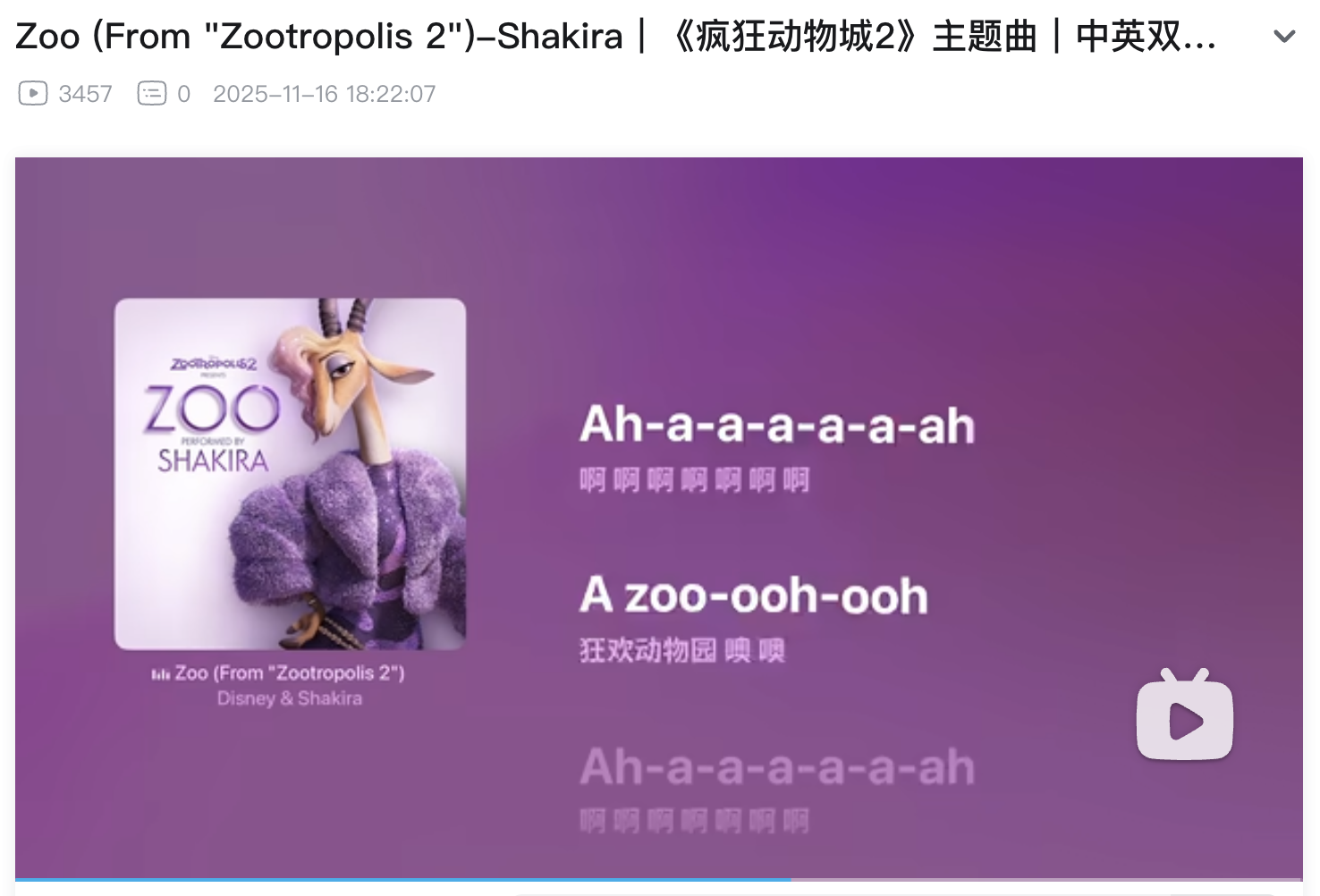
Let me know if you find the better translation somewhere. I haven’t heard a Chinese version of the theme song yet, but I’ll be interested to see what translation they use (hopefully the one I saw in the theater subtitles).
20
Aug 202525 Years!
I just had my 25th Chinaversary today. Although I don’t usually pay much attention to this date, 25 years felt like enough of a milestone to make a cheesy graphic about it!

(Yes, apparently I’m big in Guilin.)
So the amount of time I’ve lived in China has now significantly exceeded the amount of time I’ve lived in the US or anywhere else.
It’s a weird feeling.
I’ve written about my history with Chinese over on the ARC (Advanced Readings in Chinese) Substack if anyone is interested in taking a peek.
02
Jun 2025The Periodic Table in Chinese has fun surprises
I recently came across this YouTube video, and it echoed a lot of the same discoveries I made, back in the day. If you’re learning Chinese, and you’re even a little bit curious about the names of the elements in Chinese (and yes, this involves some special characters!), check it out:
A got AI to provide a nice little summary of what the video covers:
- Unique Characters: Unlike the Japanese system which largely uses phonetic borrowings, each element in Chinese has its own distinct character, which is unusual as most Chinese words are compounds of multiple characters [01:33].
- Rarely Used Characters: Many of these element-specific characters are very rare, and the discovery of new elements presents opportunities to coin new Chinese characters [01:54, 02:08].
- Phonsemantic Compounds: Almost all characters on the Chinese periodic table belong to the category of phonsemantic compounds [05:22, 06:29]. These characters combine a semantic radical, which hints at the element’s general category, and a phonetic element, which suggests its pronunciation [05:22, 05:52].
- Radical Categories: The semantic radicals used for elements are often based on their state at room temperature: the metal radical for solid metals, the stone radical for solid non-metals, the air radical for gases, and the water radical for liquids [06:56].
- Phonetic Elements: The phonetic component of the character is usually a simplified transliteration of the element’s international name (often English or Latin) [07:35]. However, some common elements have native Chinese names [07:52].
- Conjoined Meaning Elements: About ten elements also belong to the conjoined meaning category, where the character combines elements with related meanings, such as oxygen including the character for nourishment [06:38, 08:16]. These are also phonsemantic [08:41].
- Naming New Elements: Naming new elements involves assigning a radical based on predicted physical properties and a phonetic element based on the international name. Homophones with existing element names need to be avoided [08:49, 09:36].
- Pronunciation: Generally, the pronunciation of these modern element characters closely follows their phonetic components, even in tone, as sound changes haven’t significantly altered them yet [09:55, 10:03].
- Homophone Issues: While there are generally no homophones among element names, tin and selenium are both pronounced “C,” leading to an alternative reading for tin [10:17, 10:27].
- Lack of Disambiguation Suffix: Surprisingly, the suffix “su,” commonly used for disambiguation in Chinese, especially for monosyllabic words, is not typically used with element names [10:41, 11:05]. The speaker finds the Chinese system of naming elements to be interesting and well-designed, despite being a non-expert in chemistry [11:35].
14
Jan 2025Feminine Product Euphemisms in Chinese
I saw this posted by David Moser on Facebook recently:
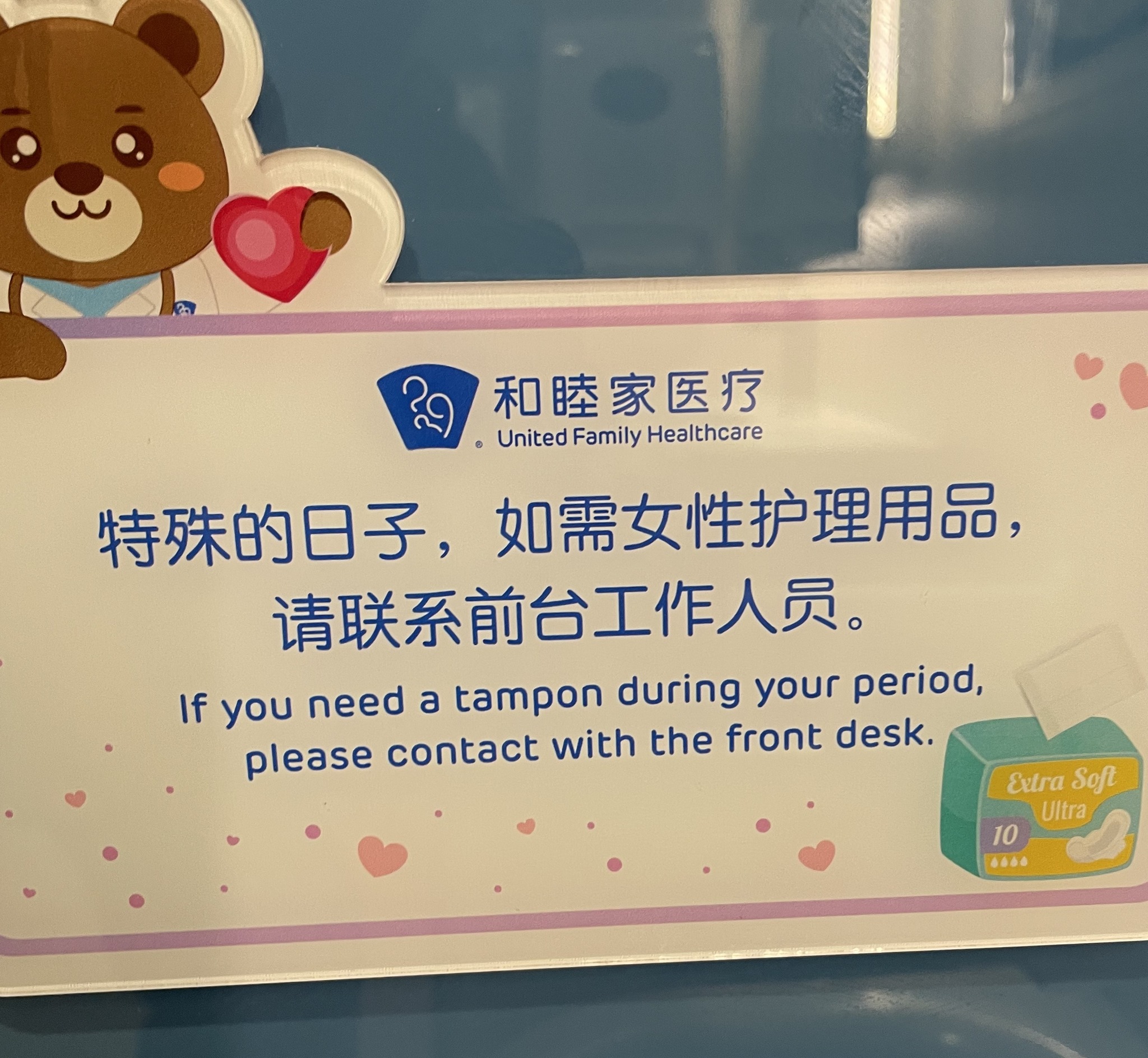
David writes:
This bilingual sign in the restroom of a Beijing hospital is interesting. The Chinese literally reads: “[If this is] a special day, [if] you need a feminine hygiene product, please contact someone at the front desk.” The English eschews such gentle euphemisms: “If you need a tampon during your period, please contact with the front desk [sic].” An interesting cultural difference?
Note that the translation of “tampon” in the sign isn’t quite accurate, and the picture doesn’t match.
There are definitely a lot of Chinese euphemisms regarding the topic of menstruation. The one I hear the most is also the simplest: 我老朋友来了 (wǒ lǎopéngyou lái le), literally, “my old friend is here.”
30
Dec 2024Children’s Charity Bazaar
Some friends in Shanghai are organizing this:

If you’re in Shanghai this January 1st (2025), come to the Children’s Charity Bazaar, which benefits the Heart to Heart Foundation, helping underprivileged children get the heart surgery they desperately need. You don’t even have to wake up early! 11am until 5pm at the 889 mall (889 Wanhangdu Rd.).
Some more info about Heart to Heart from its website:
Heart to Heart is a special fund of Ren De Foundation. We are Shanghai based, but provide corrective surgery for Chinese children from all over China with congenital heart disease (CHD) whose parents are unable to afford the surgery. To date H2H has sponsored over 3,410 children for heart surgery. The surgeries not only saved their lives, but transformed the lives of their families.
Heart to Heart is proud of the fact that we are and always have been a 100% volunteer organization. We have no paid employees. We also have a $0 operating budget which means that 100% of donations are spent for surgeries. Sponsors are given documentation on where their donations were spent and can also visit the children while the children are in the hospital for their surgery. Sponsoring a child is a truly moving experience.
26
Oct 2024More Pants than Pant
So I had a great time on my trip to Naples, Italy (I’ll have to write more about that soon), and after returning to Shanghai I have continued to study Italian through Duolingo and ChatGPT.
One thing that I’ve noticed about Italian is that plural forms require a lot more attention than I’ve ever given them in any of my language study to date. In Spanish plurals take an “s” like in English. Then in Japanese and Chinese, you don’t have a regular plural form, for the most part.
Suddenly in Italian you have “-o” and “-a” turning to “-i” and “-e” and no “s” in sight! So it requires more attention, but it’s interesting.
Meanwhile, studying Italian also brought to my attention another issue that Japanese and Chinese never did: how the word “pants” (e.g. “trousers” for you Brits) is plural. Why is it plural? It’s one piece of clothing like a shirt or a dress. Sure, there are two pant legs in a pair of pants, but there are also two sleeves in a shirt. Italian uses a plural word for “pants” just like English and Spanish.
This got me thinking… what about other languages in Europe? So my buddy ChatGPT helped me create this chart, which seems to be accurate:
| Language | Word | Singular/Plural |
|---|---|---|
| English | pants | Plural |
| Spanish | pantalones | Plural |
| French | pantalon | Singular |
| Italian | pantaloni | Plural |
| German | Hose | Singular |
| Dutch | broek | Singular |
| Portuguese | calças | Plural |
| Russian | брюки (bryuki) | Plural |
| Greek | παντελόνι (panteloni) | Singular |
| Polish | spodnie | Plural |
| Swedish | byxor | Plural |
| Norwegian | bukser | Plural |
| Danish | bukser | Plural |
| Finnish | housut | Plural |
| Hungarian | nadrág | Singular |
| Czech | kalhoty | Plural |
| Slovak | nohavice | Plural |
| Romanian | pantaloni | Plural |
| Bulgarian | панталони (pantaloni) | Plural |
| Croatian | hlače | Plural |
| Serbian | панталоне (pantalone) | Plural |
| Estonian | püksid | Plural |
| Latvian | bikses | Plural |
| Lithuanian | kelnės | Plural |
So, only French, German, Dutch, Greek, and Hungarian have a singular take on “pants.” Interesting…
05
Oct 2024Business Trip to Naples, Italy
I’ve got a trip coming up this October 6-12, and it’s to Naples, Italy. I’m quite excited about it because I’ve never been to Italy.

The trip is a meeting with some European academics working on a multilingual, international platform for teaching Chinese. I’ve been contributing to the project through the Chinese Grammar Wiki, and this month I’ll finally be able to meet up with the other academics (from Poland, Denmark, the Czech Republic, Italy, and Germany) and discuss grammar pedagogy and resources. (I’m pretty sure AI is going to come up as well.)
It’s funny, about 16 years ago I was managing a number of “LanguagePod” teams while working at ChinesePod. One of them was ItalianPod, and while I loved that team and the energy and culture they brought to the company, I never really learned much Italian. “Ciao a tutti!” comes to mind.
Now, knowing for a while that I have this trip to Italy coming up, I’ve been studying Italian on Duolingo and using ChatGPT to tutor me in Italian with reference to Spanish (which I have still retained quite a bit of). I’ve been building my own phrasebook and using AI to create audio for that phrasebook. It’s all been a very fun and interesting way of learning Italian quite different from ItalianPod (which, unfortunately, is not so easy to find now). We’ll see how it goes…
If I have any friends in Napoli I’m not aware of, please get in touch!
04
Oct 2024This BBQ is FIRE

The fire component 火 has been enhanced on this sign, quite appropriately, since the word is 烧烤 (shāokǎo), or “barbecue.”
Taken on a mountain road near Tonglu, Zhejiang Province (浙江省桐庐县).
(PSSST…. If you’re looking to finally learn to read Chinese characters, by sure to check out my new book!)
08
Sep 2024Reflections on my Experience Learning to Write Chinese Characters

I recently contributed the following reflection to a book called Transforming Hanzi Pedagogy in the Digital Age: Theory, Research, and Practice: 电写时代的汉字教学: 理论与实践 (1st Edition) by Chengzhi Chu (Editor), Matthew D. Coss (Editor), Phyllis N. Zhang (Editor).
With permission from the authors, I’d like to share my contribution to the book.
Reflections on Writing Chinese Characters In and Beyond School
by John Pasden
Writing as a Beginner
As a beginner learner of Chinese at the age of 20, I was extremely enthusiastic about learning Chinese characters. It was the artistic, cryptic of the Hanzi that pulled me in from the start, well before I was sure if I could ever possibly even make myself understood in spoken Chinese.
I loved the (rarely guessable) pictographic representations, the even more unintuitive characters indicating abstract meaning, and the plethora of combinations in a myriad of possible structures that very nearly descended into madness.
Of course I was eventually able to make sense of the system, but that would take years. If not for the undeniable allure of the written form, though, I never would have made it to that point.
Captivated by Calligraphy
As an undergraduate student at the University of Florida, I had a language partner from Zhuji (诸暨) in Zhejiang Province, China. This guy was a brilliant engineer, but was also a kung fu practitioner, competitive at the national level. When I asked him to write some characters for me one day during one of our conversation sessions, I never imagined what I was in for.
The strokes flew from his simple ballpoint pen like water… streams, rivulets, and splashes dancing across the page. He didn’t even tell me at the time, but he was also proficient in pen calligraphy. It blew my mind that these beautiful strokes were actually written language.
My passion for Chinese characters was ignited, but at the same time some seeds of doubt had been planted: there was no way I could ever write like that, right? What am I even doing?
Writing in Daily Life
A year later I wound up living in China. The year was 2000, and I soon came to understand that the average Chinese person does not write like a wizened philosopher-calligrapher.
Although I was writing out Chinese characters in my notebook, writing flashcards, and filling out the occasional form as part of daily life in Hangzhou, hand-writing characters was not a huge part of my life in China. Listening, speaking, and reading were my main interactions with the language.
What I found myself doing more was using a relatively new (at the time) chat program called QQ. I could chat in Chinese with random strangers, and because it was all in text and I used a Chinese name, they didn’t even realize they were chatting with a foreigner until I gave myself away. I made a game out of trying to delay the reveal as long as possible. If I could just get my grammar and vocabulary right (and you know I was furiously looking up words during every chat session), then I could sometimes do it.
Although Chinese characters had a special place in my heart, removing hand-writing from my practice of the language was actually liberating and heartening because I could spend more time on what I loved about the language.
Hand-writing for Academia
A few years later, I was working hard to get into a Master’s program in applied linguistics at East China Normal University (华东师范大学) in Shanghai. Although I had a background in linguistics, it wasn’t in Chinese linguistics, and it wasn’t in Chinese. So I had to pass a test on modern Chinese. The stuff I would have learned if I had done my undergraduate degree in China. But perhaps most significantly, the test was composed of a series of essays, to be written by hand, with a time limit.
Working my way through the Xiandai Hanyu undergraduate textbook was not bad at all. I enjoyed it. But I had to be able to answer a variety of questions in essay form. My characters couldn’t look too awkward, and my writing needed to at least approach the level of a Chinese university student. Perhaps what challenged me the most was increasing my speed. The muscle memory needed to be formed. It was a huge challenge, and I often found myself frustrated that I couldn’t spend more time on the fascinating linguistic features of Mandarin Chinese. I was jealous of my classmates, who could effortlessly produce eloquent sentences in beautiful semi-cursive script. I knew my academic Chinese was improving rapidly, but when I watched them write, I felt pangs of despair. I had to repeatedly remind myself what I already knew: that hand-writing was not crucial to my learning.
The Death of Hand-writing (for Me)
I got into the Master’s program. Eager to learn and to prove myself as the only foreign student in my class, I was ready every lesson to take notes on my professors’ lectures. There were a lot of lectures. They were long. They were sometimes rambling. Before long, I started wondering how many notes I really needed to take. And I noticed that some of my classmates were bringing their laptops to class.
By the second semester, I was digital only. It was so much easier to type out any notes I needed to take. More importantly, after being admitted into the Master’s program, I never needed to write by hand again. In the work I started doing in my field, I never needed to write by hand either. This was a trend that would extend to all aspects of my life in China.
What’s more, I had proved to myself that I could do it: I could get my hand-writing speed and proficiency to the point that I could pass written exams. But I would probably never again take such a written exam. Knowing I could do it was enough for me. The challenge had been met, and I was ready to move on.
Breaking the Cycle?
I’m now an educator helping learners of all levels to learn Chinese. The subject of characters and hand-writing comes up often. Usually the solution is simple: in this day and age, it’s no longer necessary to learn to write everything by hand. Sure, there are exceptions… if you want to become a Chinese calligrapher, your fate is quite different! But most learners nowadays want to read electronic texts in Chinese and send messages to Chinese friends on WeChat, by email, or in other digital spaces.
And yet, some learners have trouble remembering characters at all without considerable time invested differentiating similar characters, researching character etymologies, or, in some cases, even writing out lots of characters like the students of yesteryear.
Furthermore, my own children have grown up in China, and I see no sign of the rote method for learning characters changing any time soon. Even in the midst of the Shanghai government’s “Double Reduction” (双减) policy, and the online schooling forced upon us by the pandemic, the demand for extensive hand-writing continues.
I can’t help but wonder: can we learners ever be truly free of this burden when native speakers are not? Is a better solution already here in this digital age if we could just shake off the shackles of tradition? Although the temptation is strong to teach beginner foreign learners in the same rote ways that Chinese children have learned traditionally, new research is promising. Personally, I am optimistic.
Additional Links
- If you are an educator or learner interested in this book, you can purchase it on Amazon: Transforming Hanzi Pedagogy in the Digital Age: Theory, Research, and Practice: 电写时代的汉字教学: 理论与实践 (1st Edition). I truly believe that this is the future of Chinese learning, and it’s great to see this group of educators pushing forward with the idea of typing as primary over hand-writing character.
- Olle Linge, writer of the blog Hacking Chinese, was another contributor to this book. He has posted his own contribution here: Chinese character learning for all students.
- This summer at AllSet Learning my team and I have finally made public a very long-term project in the form of a book called Learn Chinese Characters by Reading. It provides a method and a sequence for learning to read the 200 essential characters which will put you on the road to reading Chinese. It is very much in the spirit of the book I’ve quoted from above, and one of the researchers, Matt Coss, has written the foreword which you can read online. (I’ll be writing more about this book soon.)
08
Apr 2024Zheeeeeen Leeeeei
I found this fun shirt on Taobao:

I love characterplay but I found this shirt, while clever, a little whiny. So I checked the seller for other designs like this, but this was basically the only one of this kind.
02
Apr 2024Standing Escalator Etiquette in Japan
I always liked how people in Japan stood on one side of the escalators and let those in a hurry clomp on up or down the other side. It seemed courteous and efficient. At some point, years ago (maybe around 2010?), Shanghai also implemented such a system. Signs went up. I was told that Shanghai was adopting Hong Kong’s escalator etiquette. In any case, I saw it as progress.
Sadly, it didn’t last long. The system was abandoned after less than a year, as I recall. I never knew why.
On my last trip to Japan (March 2024), I discovered that Kyoto and Osaka are now discouraging the “stand on one side, walk on the other” escalator system. I was quite surprised by this.

I did a little research and discovered two things:
- There are a lot of old people in Japan taking the subway system. Having a “fast lane” on the escalators is seen as a safety risk. (Fair enough.)
- A study has been done which showed that the “fast lane” escalator system actually results in a lower throughput over the same amount of time. (The key is that only about 25% of escalator commuters use the “fast lane,” but it takes up half the escalator.)
So I guess this is a triumph of reason and science?
I still kind of miss the fast lane, though. In Japan and in Shanghai.
01
Feb 2024Sleep No More in Shanghai
Last Friday I went to a production of Sleep No More (不眠之夜) here in Shanghai. My wife bought us tickets. Although she has a pretty good record of choosing this kind of live entertainment, for some reason I was expecting something boring. Sleep No More is definitely not boring.

In this immersive theatre experience, the audience disperses and wonders through sets covering 5 floors while the cast act out various scenes across all 5 floors. There is no dialog and there is no way to see everything. You have to choose which characters to follow, where to go, and hope for a little luck. Going with friends really helps, because you can split up and compare what you witnessed. The story actually repeats as a loop, three times over three hours.
The whole thing feels like a dream, and the sound design enhances this. Plus every member of the audience is required to wear a white mask. This turned out to be really crucial, because it helps everyone to identify the characters in the story you’re trying to watch. It’s also a clever trick by which a member of the cast or the staff can easily disguise himself as an audience member, and the characters in the story do occasionally interact with the audience a little bit.

At one point, one of the female characters was doing a sexy dance in an old style telephone booth (the story is set in the 1930’s). The woman pulled in a member of the audience, then closed a curtain. Later on when she opened the curtain and left the booth, the audience member was gone. I investigated and found a secret door in the back of the booth. I was going to go in, but the staff pulled me away. Although the production encourages the audience to “be bold,” there are definitely places you’re not allowed to go.
Anyway, this was a very interesting theatre experience, the kind that really sticks with you. It’s not cheap (around $100 USD), but entirely worth the price. There’s not even any appreciable language barrier, given that the story is told without dialog. So if you’re in Shanghai and looking for an interesting cultural experience, this one is worth a try. (Not for kids. You will need to reserve tickets in advance.)
21
Nov 2023Thoughts on Yangshuo (Guangxi)
The first week of October is still China’s “National Day Golden Week” holiday, meaning that we get 7 consecutive days of vacation October 1-7. Of course, such a treat can’t come without a bit of pain… in this case, we also had to work the weekend after to “make up for” some of the days off. Truly a maddening system. A seven-day workweek following the holiday really does come close to nullifying the whole point of the holiday for many.
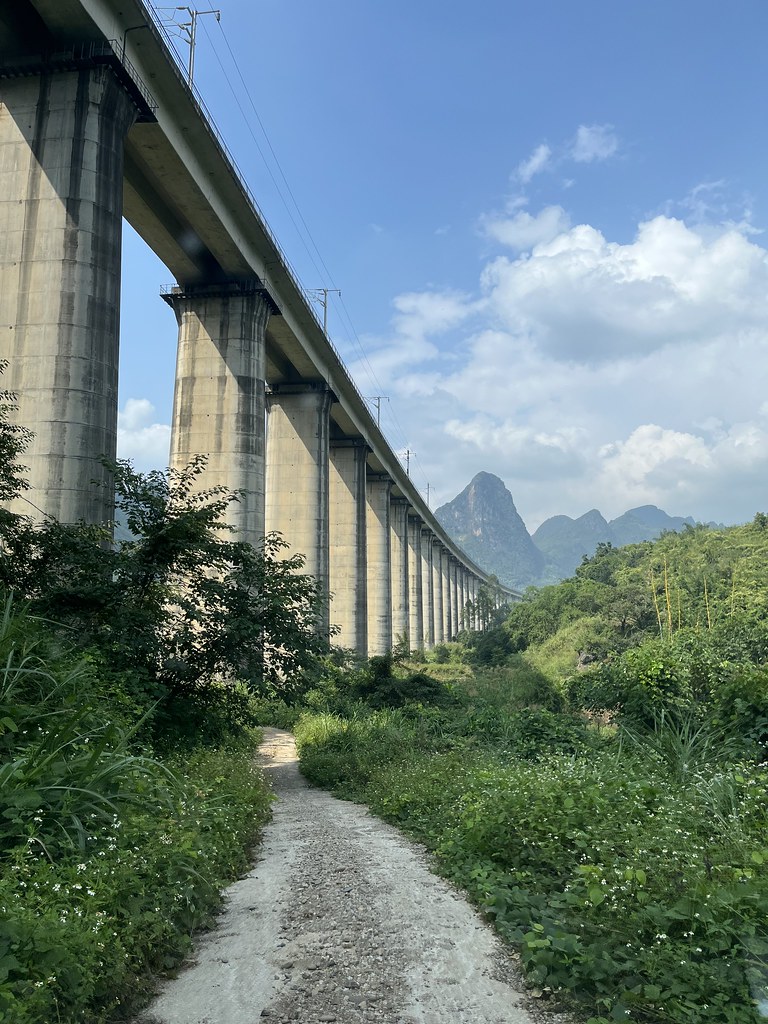
For the October holiday this year, I went on a trip with my family to Yangshuo (阳朔), a mountainous region near Guilin full of all kinds of outdoor activities. Actually, though, we didn’t really go to Yangshuo. That’s kind of the point of this post.
I first went to Yangshuo in 2003 as a teacher still living in Hangzhou. It was just becoming a popular tourist destination back then because many other choices, such as nearby Guilin, had already become way too touristy. Anyone looking for something more outdoorsy, a bit off the beaten track, had to seek out less well-known locales. At the time, Yangshuo fit the bill perfectly.
The next time I would visit Yangshuo was in 2022. My wife knew about the destination from me, and had heard good things about it. She found a local tour company that could set up family-friendly activities like swimming, hiking, caving, stand-up paddle boarding, and river trekking. What I didn’t initially know at the time was the activities planning were almost entirely not in Yangshuo, but the neighboring area. This is because in almost 20 years of development, Yangshuo had become so touristy as to be generally avoided by many travelers.
So this past trip I paid more attention. We didn’t actually go to Yangshuo at all (except maybe passing through). We spent most of our time in a county called Xingping (兴坪). It was all pretty fun, and despite the hordes of holiday tourists, we were generally able to avoid them and do our own thing.
Some photos:






30
Sep 2023HACKED
Hello to my email subscribers (if you’re still there).
I’ve been hacked in a way that is only visible to my email subscribers. Spam messages are going out through WordPress.com email notifications.
I’m working on fixing it, but unfortunately this happened right when I went on vacation to Yangshuo with my family. Will try to solve it ASAP!
UPDATE: I had the problem fixed within 24 hours, but unfortunately some of you got spammy emails from Sinosplice. Sorry about that. The problem is fixed.
17
Aug 2023Chinese-like Graffiti in Atlanta
My original hometown may be Tampa, Florida, but my family relocated from there to Atlanta, Georgia in 2020. So this past July, I was finally able to take my whole China-based family to visit this new “home base” in the US. It was great to be back with family for almost a whole month after being unable to visit due to COVID for about 4 years.
I won’t say too much about the visit, other than that it was really nice. I’ve been taking a break from blogging this year, and we all had a great time.
Chinese did randomly intrude on our vacation, though, such as in this graffiti I spotted on the Atlanta Beltway.

Here’s a closeup of the part on the right:

Is this real Chinese? I’d have to say no. It does look like a “graffiti style font” of real characters in some ways, and I can recognize parts of real characters, but then they also have weird extra strokes that don’t work. There are a few “near misses,” but every single one looks off in some way.
Still, it’s fun to see this. You can tell that someone took the effort to really observe real Chinese characters and try to do their own artistic take on them.
And I do love a little characterplay!
28
May 2023Share Bikes, Stacked High
Years ago, I blogged about Mobike and how it was changing the way we commute in Shanghai. That’s old news now. COVID has come and gone (sort of). But we’re still using these shared bikes. Now there are two big names: Meituan (unlock the bikes by scanning their QR codes with WeChat) and Hello Bike (unlock the bikes by scanning their QR codes with AliPay).
These shared bikes are all over the city. Sometimes there are so many of them in one area that a sidewalk will be completely blocked. In order to redistribute the bikes in a useful way, you often see big trucks collecting the bikes from an area overflowing with them in order to send them somewhere they’re needed.
And then you might also see this:
(Videos courtesy of Issac L.)
05
Apr 2023Rate of Speech Affects Learning
I think rate of speech is one of those things that gets some attention at certain points in one’s studies (especially the beginning), but easily gets forgotten under mountains of vocabulary, tsunamis of pronunciation, and avalanches of grammar.
Here’s a You Can Learn Chinese podcast from last month where we discuss how rate of speech stays relevant at different stages of one’s studies:
- Teachers’ rate of speech (super important in the beginning)
- Dangers of not adapting to a natural rate of speech in one’s studies
- Looking for the right rate of speech for input
- Keeping goals in mind
- Using software to adjust rate of speech for listening materials
- Speaking faster vs. correct tones
- Perceived fluency gains with speaking more quickly?